


Enterprise Service Bus System Architecture
AI Documented Functional and Enterprise Service Management Spec
Security Analysis and Supply Chain Risk Enterprise Plan Documentation
https://github.com/persephonepunch/crm-sync-setup/blob/master/FEATURE-SPEC-UA-MIGRATION.md
Trust Partner Infrastructure Analysis
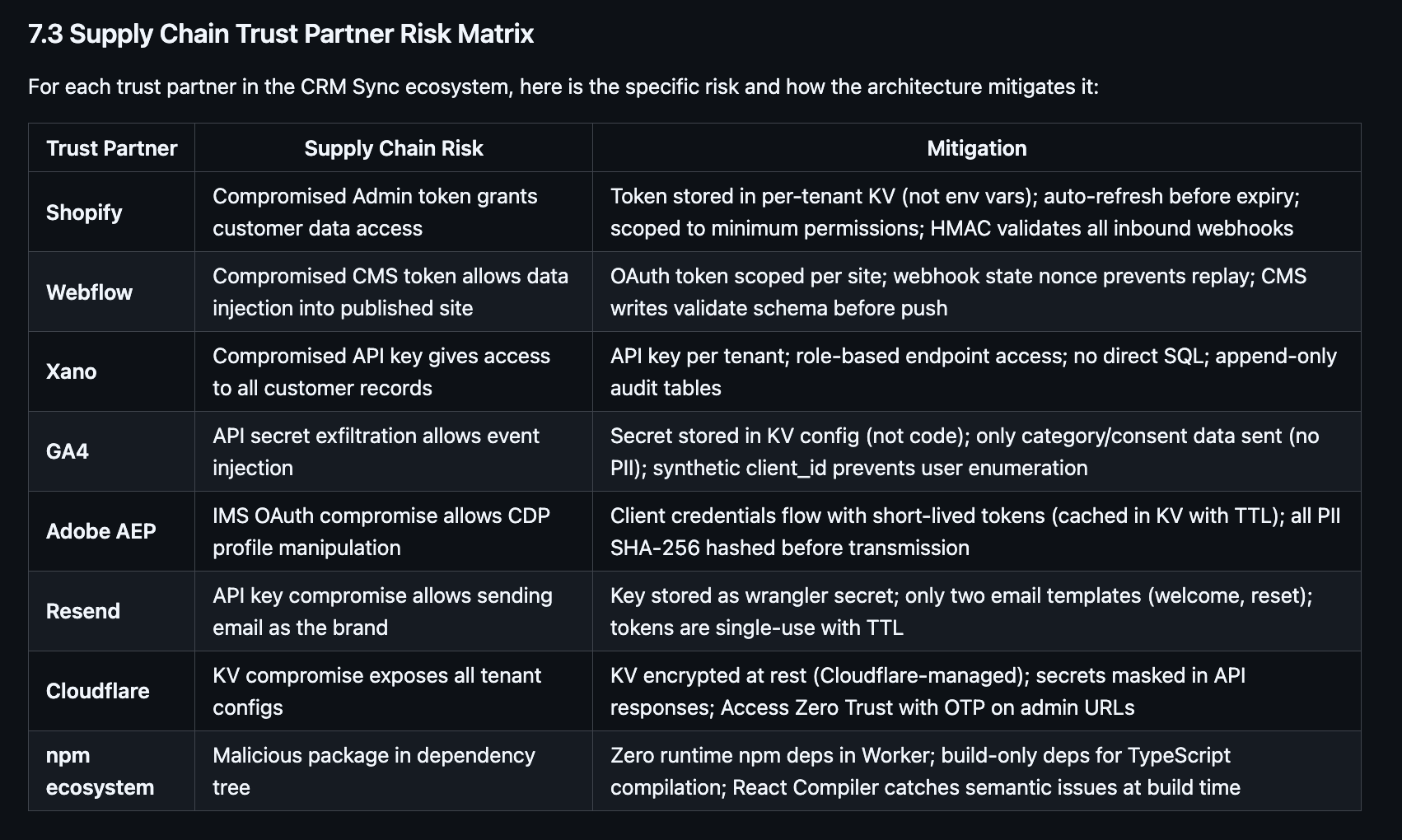
SOC2 Organizational Audit
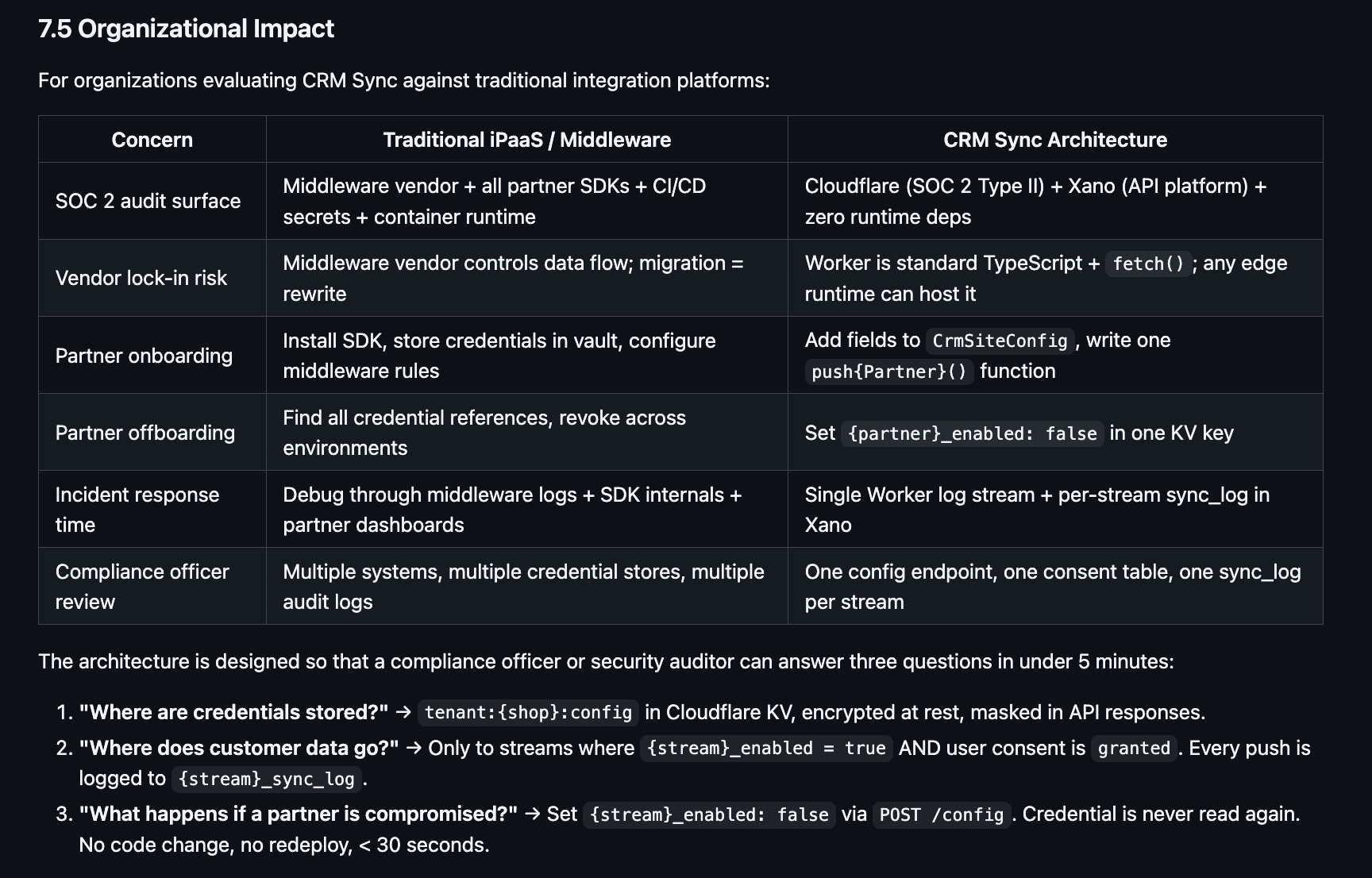
Migration and Data Schema Strategy
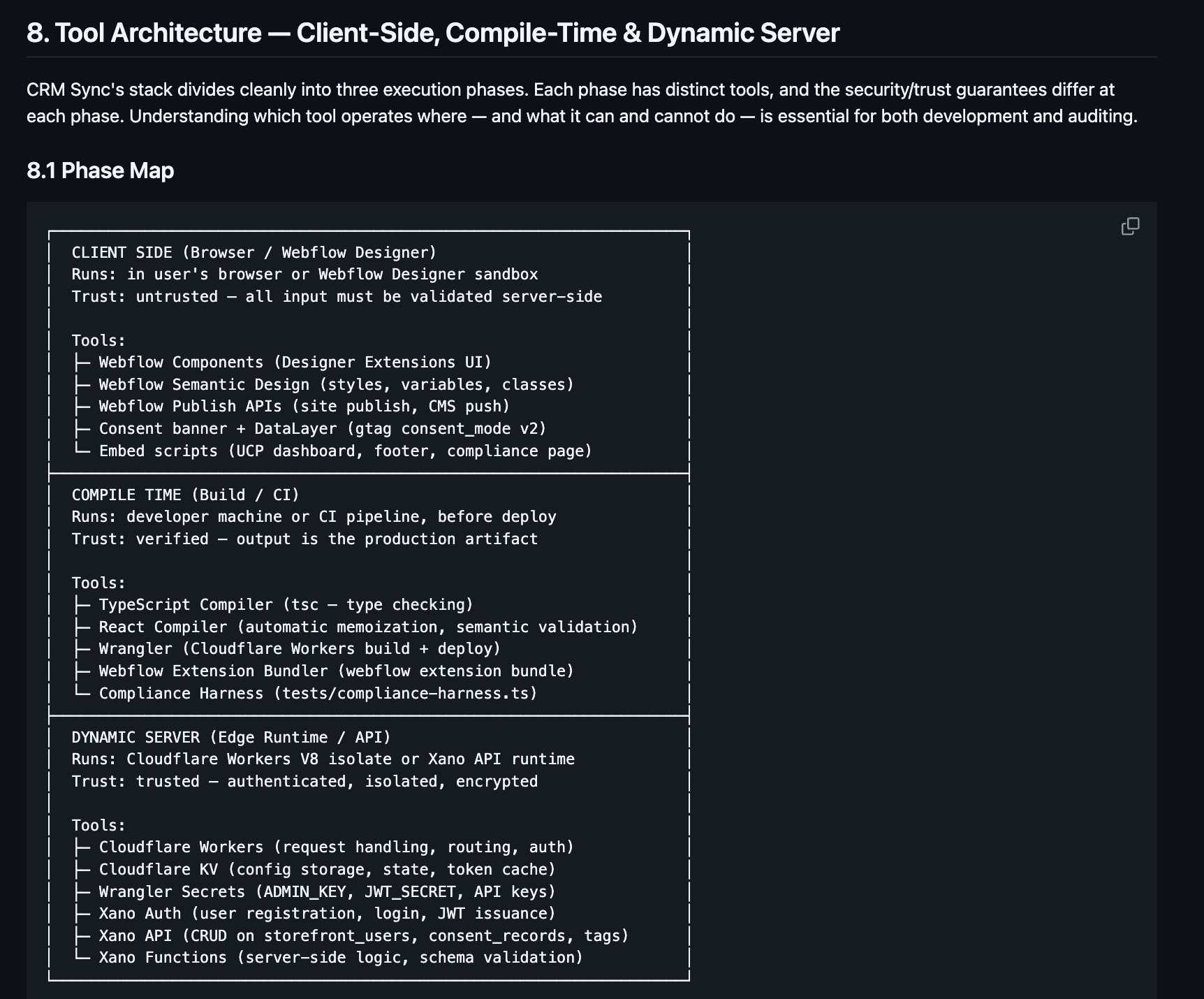
UCP Migration Guide Summary
Migrate from legacy Enterprise Service Bus (ESB) architectures (IBM WebSphere/MuleSoft) to AI-enabled agentic commerce using modern protocols.
Core Protocols
- UCP (Universal Commerce Protocol) - Standardized transactions between AI agents, merchants, and payment systems
- A2A (Agent-to-Agent) - Multi-agent communication for product discovery and transaction orchestration
- AP2 (Agent Payments Protocol) - Secure agent-led payments with cryptographic Intent/Cart Mandates
Key Components
- Shopify Global Catalog - Product discovery with Universal Product IDs (UPIDs)
- Xano - Backend data layer with JWE/JWS session tokens, encryption, and idempotency
Functional Requirements
- Data Store Consolidation - Unify E-Commerce, PIM, CRM, WMS, and fulfillment systems
- Real-Time Consent Services - Cross-channel consent with cryptographic audit trails
- Secure Token Management - Two-tier JWE session + transaction tokens
- DSR Compliance - Automated Data Subject Rights reporting (GDPR/CCPA)
- Risk Mitigation - Eliminate single-direction data overrides causing sync issues
Migration Phases
1. Foundation - Xano setup, JWE authentication, Shopify Catalog integration
2. Agent Development - Build A2A agents, implement AP2 payment mandates
3. Cutover - Traffic migration, legacy ESB decommissioning, monitoring
https://ucp-strategy-migration.netlify.app/
Universal Commerce Protocol and Shopify Catalog System Guide
AI Built PRD with LLM and READ ME Docs
PRD Summary
This PRD outlines a Webflow Integration Knowledge Base system that connects Webflow, Shopify, and Google AI platforms to enable personalized, AI-powered commerce experiences. The architecture uses a non-destructive CMS design with 11ty static site generation, Xano/n8n middleware for webhook processing, and Shopify Metaobjects for custom data storage. The system manages UCP (User Content Personalization) sessions, user history, consent tracking, and real-time data streaming across platforms.
Key Points
- Multi-platform integration — Connects Webflow CMS, Shopify backend, and Google AI Platform into a unified data flow
- Non-destructive CMS design — Uses 11ty-synced collections with GraphQL mapping from Shopify, preserving existing content structures
- Middleware automation — Xano and n8n handle webhook processing and workflow automation between platforms
- Session & consent management — Client-side UCP session management tracks user history and consent preferences
- Real-time streaming — Google AI Platform enables real-time analytics and personalized experiences
- Five-phase implementation — Covers architecture review, Webflow setup, webhook configuration, Shopify Metaobject definitions, and Google AI data streams
https://kb-webflow-docs.netlify.app/
PMAX / AEO Revenue Analysis

AI/Claude Mapped #Context Rules
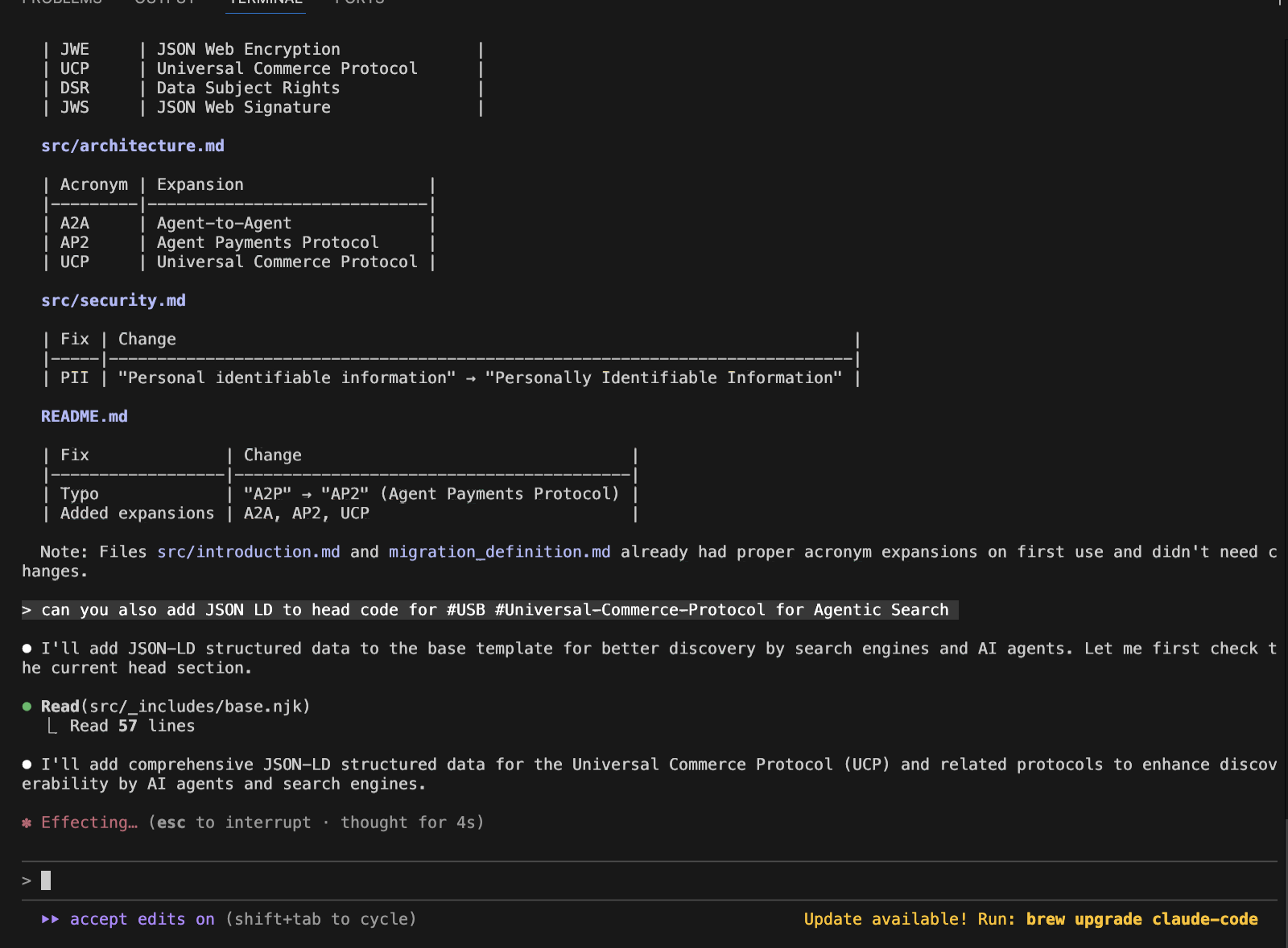
Answer Engine JSON LD Optimization Context Mapping

API/AI Sockets Real Time Risk Mitigation Data Reshape

Shopify Catalog Universal AI/Segment Naming GID

BEM Modifier Semantic Conversion Event Analysis
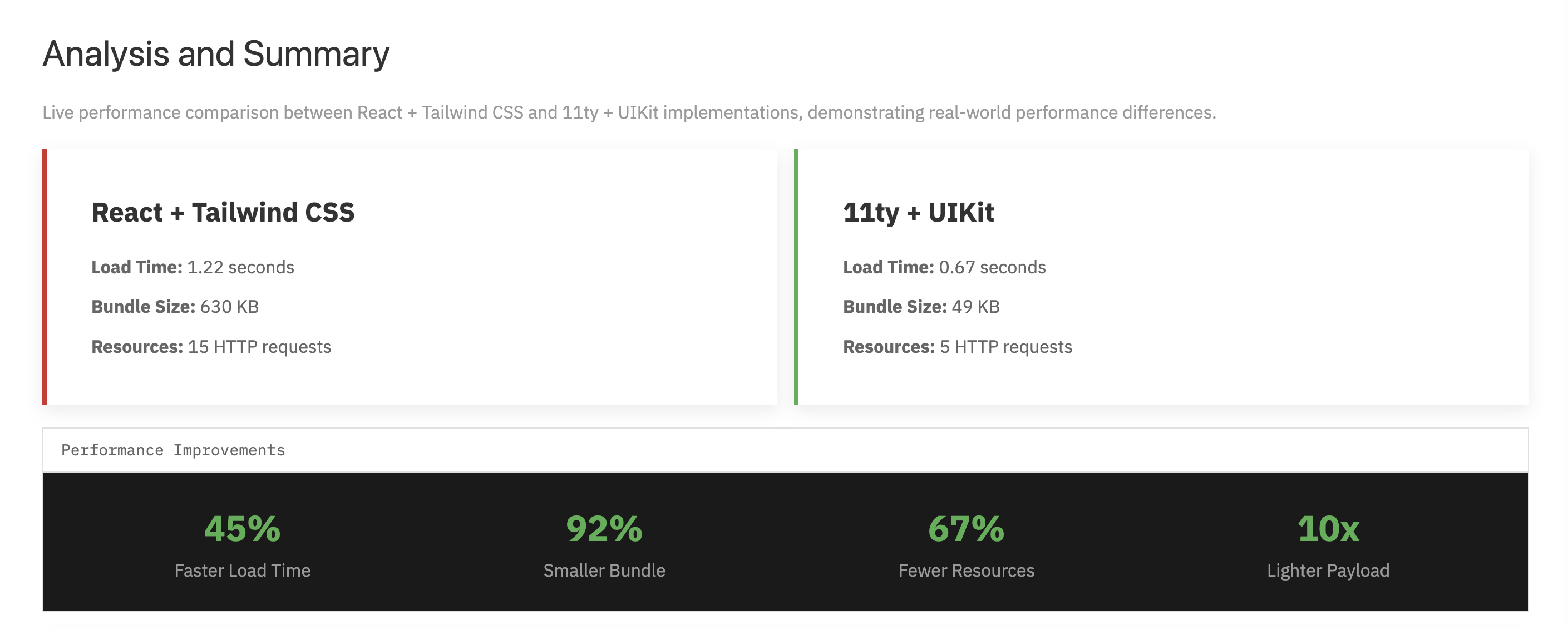
Manual PIM-CSV-Matrixify to Enterprise Universal Commerce Protocol Data Managers AI-API Streaming
https://claude.ai/public/artifacts/96144c7b-d0b8-4de6-9d20-c2d87574edf2
User Acceptance Testing Requirements for AI Enabled Data Management PRD/LLM
Problem/Response Logic Enterprise System AEO example
Problem:
Expensive out of sync consent Middleware: (Boomi, Mulesoft, Websphere), that is only accessible by Consulting teams who also charge $300/hour. Repeated lawsuits.
AI Solution, and Testing Logic:
Save immediate $500,000. Secure Data Governance. Set up Streaming AI Optimized Data with Failover. Setup Testing and Entitlement with TLS Claims/Extras evergreen data records, that Enterprise Org keeps regardless of SAAS fee.
https://www.perplexity.ai/search/please-describe-enterprise-uat-gjBrQUEvSk6UcqGdln7WXA?preview=1


